
When I took off for a vacation in Tennessee with a friend’s notes for his medical thriller, my picture of the story he wanted to tell was about as clear as the Smoky Mountains I landed in. Dr. Lee Thibodeau had certainly infected me with his enthusiasm for a tale of black-market kidney transplants, but every writer knows how long the journey can be from a stirring story premise to a book that keeps readers turning pages until its end. I was ready to dig into Lee’s world to learn the details necessary to ground my fiction in medical plausibility, but I needed something outside that realm to make his story mine.
I’ve come to believe that writing a novel is like planting a garden. This image of how fiction is formed grew in my mind after years of bouncing back and forth between analyzing and intuiting my way through a tale before I reached its end. Like a garden, I find my best books are grounded in a solid plan to guide their plots, but once they take root, these narratives often take twists and turns that yield the kind of surprising fruits I could never plan. This metaphor, however, became more than just a symbol for this particular story’s frame.
Intuition, not analysis, drove me during those early mornings in Tennessee while I sipped a mug and pecked away on my laptop to tease out my tale’s bones. I imagined my surgeon-protagonist as a man with a penchant for the precision and skills needed to satisfy his ambition to be the best in his field. So when I built a greenhouse for him beside his big house in Boston, I knew he’d need a plant in it that he’d have to master to grow. I didn’t have to Google long before I found the Amorphophallus titanum, the rare and remarkable inflorescence commonly known as a Corpse Flower.
The plant’s ten-foot size and the startling deep purple spadix that opens in a single evening had enough drama to attract my attention to this botanical wonder. But what sold me on it for my story was what happens during its nighttime bloom; it emits a putrid scent that attracts pollinators to crawl within it to pursue the promise of rotting meat. That alluring ruse created the ideal icon for the plot I had in mind. Further research quickly revealed, however, that though I’d found the perfect symbol for my novel’s theme, its own story was deep, complex, and confusing. Lee was ready to provide me with the expert insight I needed to make sense of the medical setting for my story, but now I needed a different kind of pro who could guide me through the jungle of information about my star flower that I tried to weed through online.
The seven to fifteen years it can take for a corpse flower to bloom makes that event a public celebration for the botanical gardens that cultivate them. It didn’t take long to find a curator of one of the collections hosting them. His generous support of my story included regular responses to my emails as my tale grew and the corrections he offered to the scenes in my story that featured the flower’s planting, cultivation, and eventual blossoming. That sequence became a subplot that I braided with two other story arcs: the internal metamorphosis of my doctor-protagonist and the series of dramatic events that transformed both him and his world.
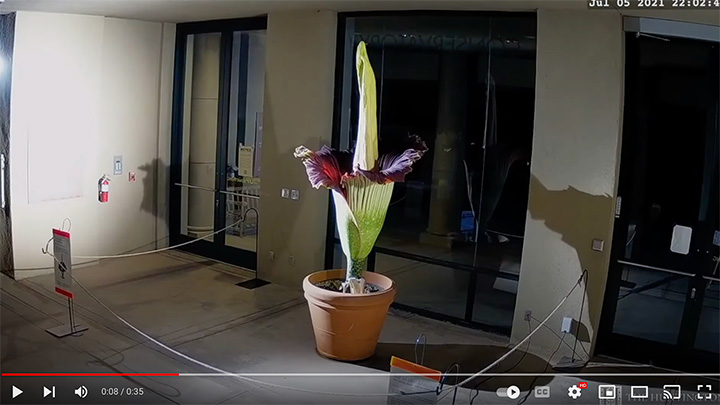
After shaping my story over the two years it took me to write this book, I finally reached the apex of the triple transition of the plant, person, and plot symbolized in my novel’s name. A future post in this series will share my approach to planting the story structure that finally took root to become The Corpse Bloom. Thanks for staying tuned!
 BRYAN WIGGINS