

When I’m out walking each morning, the memo app on my iPhone works pretty well to capture the thoughts I collect and compost for whatever novel I’m working on. But when it comes time to refine those ideas, I often ignore my keyboard and reach for my mouse to try to picture my story instead.
This almost always happens when I’m trying to understand how some system I cooked up in my head would operate in the real world. I had to nail more than one of those for The Corpse Bloom. The deeper I got into my plot, the greater my need to understand how the people, places, and processes inside Nueva Vida, the state-of-the-art transplant clinic I planted in the heart of the Yucatan jungle, would actually work.
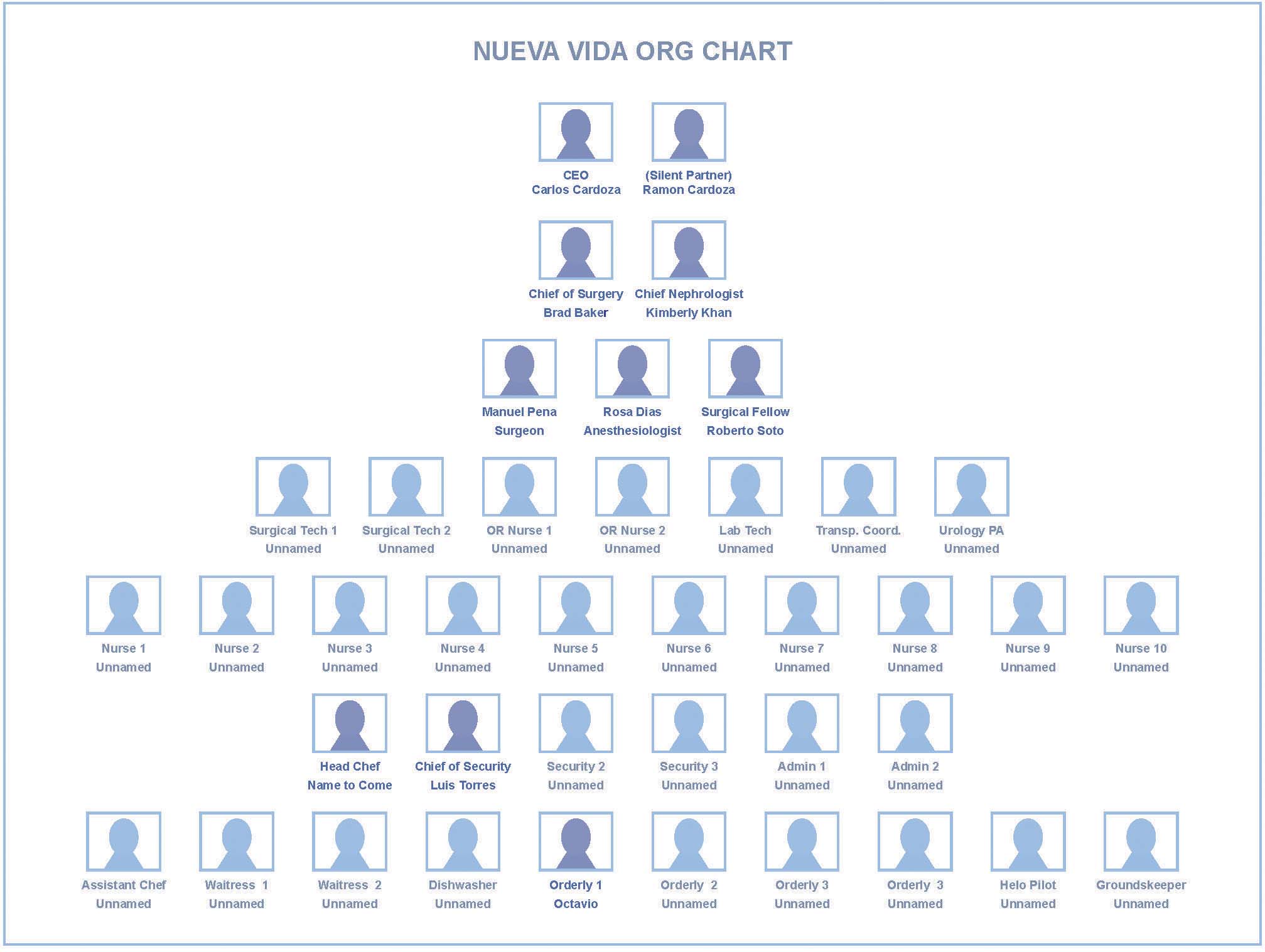
The task I set for the first image I noodled with was pretty simple: discover how many staff members it would take to run the place and define the duties they’d perform. I didn’t have to name them all, of course, but framing my main characters with notes on the jobs and their coworkers held began to bring both their identities and motivations into focus.
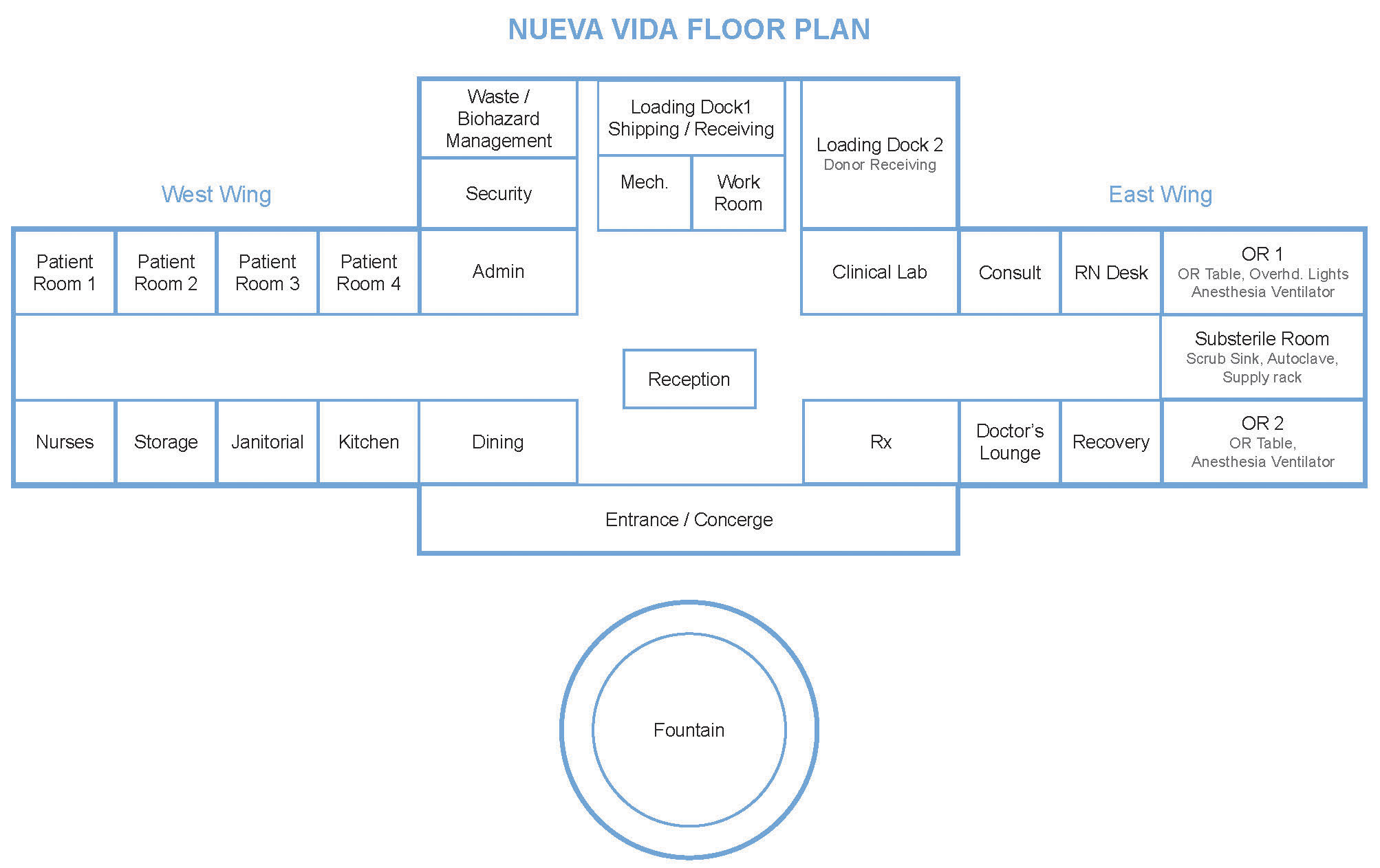
When I got the clinic’s people in play, I needed to get a better feel for the building they worked in. Luckily, my partner in this project is a neurosurgeon with decades of experience in his field. Lee gave me a list of the specialized rooms a top-notch clinic would need. I kept the layout of them simple to get a better feel for the place. The glass walls, manicured grounds, kidney-shaped pool, and even a helipad would all come later. But my beginning blueprint was all I needed to start gaining ground on exactly what might happen within my hypothetical hospital.
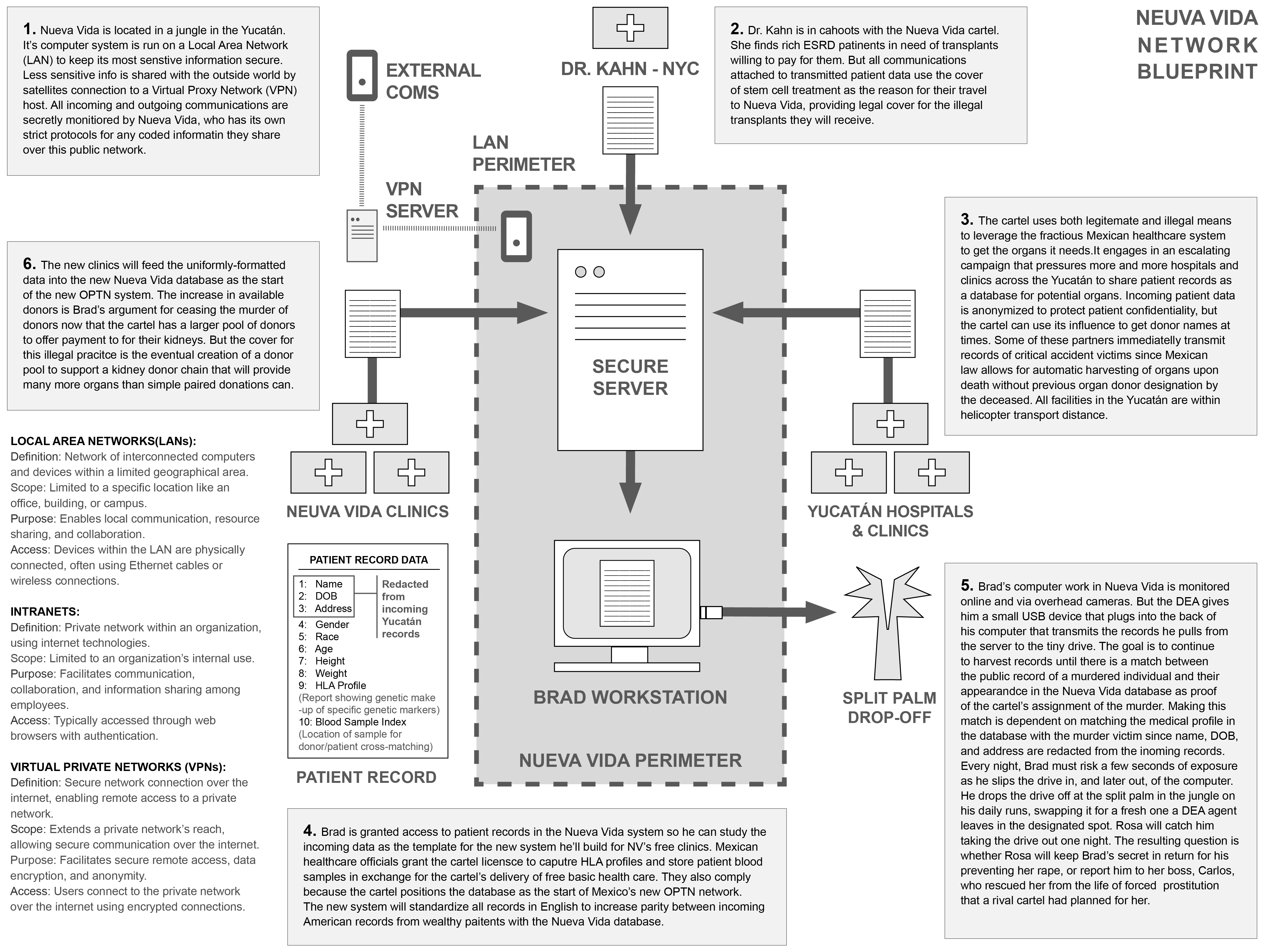
But assigning roles for the characters in my story and laying the foundation for the clinic they worked in proved to be child’s play compared with building the digital borders around their world. Once my geek friends gave me an idea of how different network infrastructures worked, I could plot how internal, local, and global communications could be accessed, sequestered, and exchanged. After I had those concepts down I could forget about tech (thank god) as long as I played by its rules when I started my characters’ digital cat and mouse games.
The first of those rules was the same one that convinced an art school grad that he had a chance of writing a believable story about people with multiple medical degrees attached to their names: Stick to the big picture of the world you’ve researched to keep the tale moving so you don’t get lost down in the weeds. The plans I made for my plot helped me do just that. With any luck, my readers will feel the same way.


Brian,
This is great. It removes some of the mystery of novel writing.
<
div>
Sent from my iPhone
<
div dir=”ltr”>
<
blockquote type=”cite”>
LikeLike
I have space now to read your book. Where can I buy a copy? It doesn’t seem to be at Nonesuch.
Fran
>
LikeLike
You can buy a paperback at the book launch Saturday or order a paperback or ebook online Saturday on Amazon. Links to both will be on my site on Saturday (December 16). Thanks so much for your interest!
LikeLike